Thursday, 14 August 2014

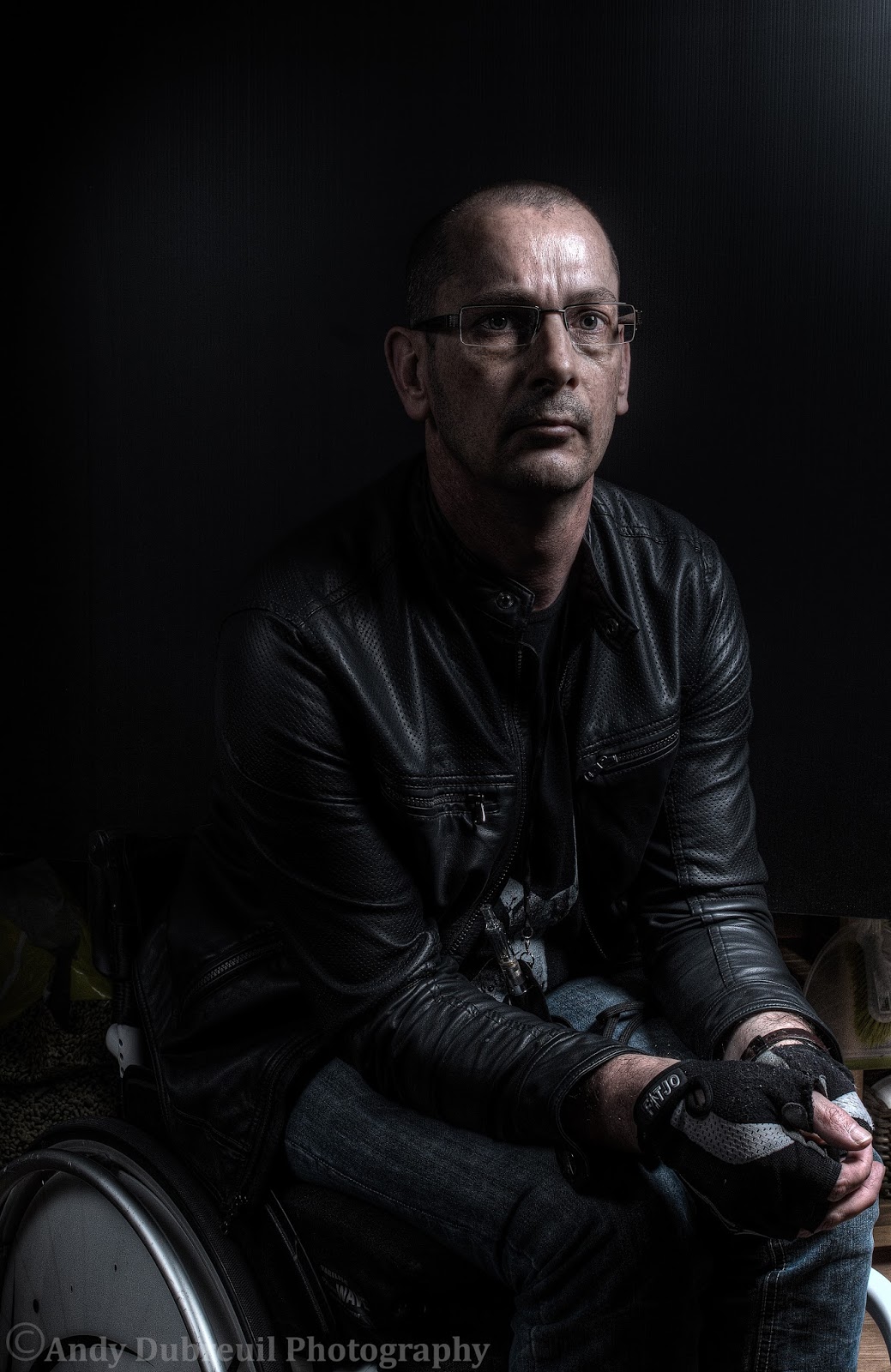
Portait Images - The Problems One Can Face

Portrait Images…

One of things I’ve found is that unless you’re working with a model that’s trained to be in front of the camera and can take direction in what you the photographer is looking for, you get the frozen and can take time to have the person comfortable in a studio or camera environment.

Being Relaxed
For any client that’s come to you and asked you to do a portrait image of them or of a family member have an idea of an image that represents them best. But putting someone in front of a camera seems to cause that involuntary look of nervous or a blank look. Many times I’ve heard people say they hate having their picture taken, but I think this is due more to the situations they've been in when they've had the image taken and by people that like everyone else has a camera and says ‘smile’ and then they see an image they feel is un flattering, this plants the seed of not wanting to have their photo taken.

There’s a great difference to someone having a camera at an event that wants to take photos, but inclined to take the photo of a funny situation that involves that person, while a photographer goes round and looks for that interesting but relaxed look that puts them in a much better light. If you say to someone to look at the camera or look to the left, they end up with this fixated look and their desperate not to blink which involuntary makes them blink as you press the shutter.

Getting that natural look
With young children and animals it seems to work in the opposite direction where you make a noise or rattle something to gain there attention. What makes this different is their not aware as of yet what a camera is or does. Older children and adults, it’s more about getting their attention away from the camera and lights and to focus on something else.

One way is to communicate, build a conversation that leans them into forgetting why they are there, make light of something that comes up in conversation that makes them give that natural smile or laugh. Take an image of someone and ask them to look direct at the camera and then another using the commutation situation, you’re going to see a big difference in the images that makes one stand out better than the other, and that’s the relaxed look.

Using a wireless trigger
Something that I learnt while doing my self-portrait project is to use my wireless trigger to take the shot for me as I don't have anyone to help me behind the camera. 

Using a wireless trigger in the same way while working with a client, gives you the flexibility and the chance to get images easier. Once you've set the lighting and camera up on the subject, you can then move away from the camera and then have your subject focus on you. For instance you want them to look slightly to the left, you move yourself to that position of the angle you want them to be in. you’re getting them to focus on you and not the camera so if you strike up that conversation and carry it through, you’re always going to have that natural look.

Moving around and communicating brings those images your trying to create without that professional model direction. A wireless trigger is there to control the shutter and doesn't need you to be behind the camera all the time. You know you've got the focal length how you want it, and the lighting, all that’s left to do is watch and click, then you’ve got the shot.

Getting the shot
I’m sure other photographers have their own techniques; this is just one way to consider working on portraits if you’re like me and you’re still learning the skills of taking good portraits. Getting those amazing shots can take time but if you find a way that makes it easier for you and the sitter, then you’re saving time and effort for both of you.


Thanks for reading, AndyD

Monday, 11 August 2014

Photography As A Business

My Story…
I’ve always been interested in photography or photographs taken by others, but it wasn't till 2013 that I got my first real camera which was the Sony A65, I did look at Canon and Nikon, but like others I had set myself a budget and the idea of being able to use other manufactured lenses was the appeal for me and I just liked the A65.
Within a few months I had purchase a few lenses and research YouTube for ideas on how to use the camera and take photos. YouTube is an enormous library that can supply awesome words of advice and step by step ways of doing things.

Facebook is a social network I've used for a long time, I have in the past set up pages and groups to do with a target shooting sport I use to do, but now I’m retired. I did try setting up a group for intermediate or people new to photography to share their images and ideas, but it was slow to take off and I don't like the way Facebook messes with the images when you post them.
Then Google was plugging its Google Plus and I found communities and photographers of all stages in their work, in one place and the layout seemed great. 

It’s a bit nervous posting your own images in a world where people are much better than you at taking images and have a good eye for an image. But my experience with the site has been positive as everyone is willing to give you positive feedback on what you’re posting. For me, that what's important so to progress in my work to get better results. Seeing others work, not only makes me envious in some way but gives food for thought on what maybe I can do based on the technique that they've used.

Over the first part of 2013, I got more into what I was doing and getting better at the understanding of images and the post editing side of things. I had used up my budget and wanted to progress further, but to do that I needed to get a better understanding of photography, so I embarked on signing up for a 3 year degree in professional photography that is part of a Plymouth University degree, but done at City of Bristol College.

Right now I've done my first year and soon to start my second year, I’ve invested in a new camera body which is the Sony A99 so all my lenses would work with it, bought gear to make a small studio at home and built a website so to promote myself and to show my work in galleries that I've set up. Now I feel ready to start doing paid work, but where does one start?

Photography Business…
So I’ve done the friends and family bit and promoted on social networks and even entered competitions, but what more can be done to get one’s self out there?

I’ve decided that I won’t stick to one area of photography like Weddings and made the point in my site and in advertising that I'm freelance. Being freelance gives me a wider audience to approach, it also allows me to decide what’s possible or not in my ability physically to do jobs that come my way.

Photography is no different from other businesses in that you have others offering the same service, I don't believe in looking to lower pricing to tender for jobs out of being desperate, your work and social skills should talk volumes for them to pay the going rate and get what they pay for and leave being not just happy but to express to others how good you are as a photographer to put your name forward.

Working for yourself isn't easy and it takes drive and looking all the time at what’s around you that might bring you work, networking with social media is good but needs to be fresh and updated, just like your website and the images you’ve put there to be viewed and to tell others that there is new items to view.

I’m just starting out and would be grateful for ideas on what can be done or improved to bring clients to see me as a potential photographer they might use. There are many on Google Plus that are Professional Photographers that have been in the business for a while, your thoughts would be so welcomed to this blog feature, even though I know it’s a big ask to make a comment and share your experiences with me and those that are reading this. 
Maybe there are pitfalls to take into account when setting yourself up that you know of or affected you when you started out, anything that you can comment on would be welcomed.

If you are just starting out like me, then maybe you have views on what works and doesn’t and happy to share in this blog.

We all have a love for photography and some decide to do it as a business while others do it as a hobby and maybe feel taking it to that level as a business is too much to take on or even see it as binge a risky thing to do, maybe you can explain why feel that way.

Thanks to everyone that's taken the time to read this and to say thank you in advance if you do decide to comment.


AndyD

Thursday, 7 August 2014

24 Hours in Bristol 2014 Competition

This is a competition that’s open to everyone, it does cost to enter and you can pay for extra images to be included and you get allocated a time slot that one of the images must be taken in.

Last year was the first time the competition was run and photographers had from midnight on the Saturday till midnight on the Sunday, I got the slot from midnight till 1 am! The weather was terrible with it being cold and raining added to the torment.
Like most I decided to photograph in the city centre and around the docks, a lot of photographers did same thing, and one of the finalist actually took a photo from the opposite side of the docks from me.
Hundreds of photographers took part in the event and were from all over the country and from Europe as well, it was a great event and I knew that if it was to happen again that I would take part.

There are lots of photographic competitions to part in, and in my view it worth having a go to gain experience and having the chance to have your work in a gallery for all to see.

This year the event is being run from the midday on the Saturday till midday on Sunday, I think this is a better way to do it and makes life slightly easier for all. We didn't have much of ID to say we were doing the event but this year supplied with proper ID's so that if anyone gets stopped by the police in the early hours of the morning, they will know what their up to as the council and police are made aware of the event and the Bristol Lord Mayor, is very much behind the event.

I'm not sure if this kind of competition is run in others cites in the UK or abroad, but it’s a great thing to get involved in and helps to promote your city. Over a thousand images were taken last year and I'm sure that a lot more will be taken this year.

For me, I want to have images that cover the morning, afternoon, evening and night. So over the last couple of weeks I've been looking and Google maps and travelling around all over the place to try and find something new and part of Bristol. I guess I'm lucky as I live in Bristol and have the time to look, while others maybe are just coming along for the weekend will find it slightly difficult to maybe get outside of the city centre and know where to go.

Last year images where landscape and street photography images, but I'm looking to try and find something different or to maybe photograph something in a slightly different way that’s more creative. 

One tool that I've found fantastic to use for knowing where the sun is going to set or rise is called TPE - The Photographers Ephemeris App, there’s also an Android version as well as a desktop version. Where ever you are in the world, you can drop a pin on the map and it will show you where the sun will rise of set as well as when there's a full moon. You can even go to a date in the calendar and see what time and where the event will happen. The app cost about £4.00 but worth the money as you can work out before you turn up at a location where sun will be at that exact time of day, its brilliant.

There's still time to register for the event and to find out more you can visit their website which is http://www.24hoursinbristol.co.uk.


Thanks for reading, AndyD 

Friday, 11 July 2014

Remote Triggers for Sony Alpha Cameras

At some point in your photography, you end up looking at getting a wireless trigger to control the shutter on your camera and some device to link your studio lighting and flash. The thing is that Sony didn't make a good job by selecting a different design in flash attachment on the camera for their top of the range cameras like the Sony A65/77/99. So when looking for a trigger it can be a bit harder as there are only a few around and the price range is either low or high and will make a difference on quality.

2.4G Wireless Aputure Trigmaster II Flash Trigger + Shutter

When I had my A65, I looked everywhere and then found Aperture made one for the camera, the build is a bit fiddly but works fine and they reckon that it will work up to 120 meters but I’ve found in the studio that sometimes it needs to be in line of sight. But it comes with all the attachments your need and the price isn't bad at about £40 and has 16 channels to work from. 
I didn't have a problem with my flash working wirelessly as you just have to put the pop flash on and then the flash would work TTL from the camera, I should point out that I have the HMVL-58AM since that has the right connection for the camera and doesn't need a hotshoe to reverse it.

Sony A99
When I invested earlier this year in the A99, I knew that it didn't come with an on board pop up flash, but I thought it would still connect wirelessly to the flash, how wrong I was. So this left me with a dilemma and had to shop around for a new wireless trigger that would do the same work with the studio lighting but would work with the flash in wireless mode. I know there are makes out there like Cowboy but is hard to get outside the States. There is Pocket Wizard but at over £200 is a bit over budget for me, Sony must have listen to complaints as they do provide a hotshoe with the A99 as part of the package.

Pixel King for Sony TTL
The Pixel King is just shy of a £100 and comes with more leads than you could ask for and a handy bag to keep it all in. You may notice that there's a USB lead, well if Pixel do any firmware update then you can connect the devices to a PC and keep them up to date, so no messing around in having to look for something else if Sony decided to do an update that might not let your trigger system work.
This set comes with 3 different groups and 7 different combinations, which is more than anyone would need. It has that all-important TTL connection and has a sync speed of up to 1/8000s and will work up to 100 meters and over. I did a test and actually will work through solid walls with its radio signal, not that you would find a situation to do this but was interesting putting it through the test. 
The receiver I love as I can connect it to the camera and then on top connect my 
Hahnel Giga T Pro II Wireless Remote Control that I use a timer remote and for bulb work, so everything is tidy on the camera.
This is a super kit and I'm sure that for other makes of camera, it will do just as a good a job, if you need to add an extra transmitter, that’s no problem and for the price I think that it does as good a job as the more expensive models. Pixel also does a receiver that can control light power output amongst other things, but I didn't feel the need to go for that as I can make do for the time being with what I've got.

So if you’re on a budget, either of these devices will do the job and a good one at that, so don't be put off if you’re looking at getting a Sony Alpha camera as there are work a rounds for these great cameras that are easy to use and light to work with.


Thanks for reading, AndyD 

Tuesday, 17 June 2014

What makes a good image?

This isn't about an image for a client or for promotional purposes.

Any image can look good as long as whatever you're trying to capture is in focus, then you have something to work with. When I did my self-portrait project, it was difficult to work out the shot, in reference on where to sit how to sit and what lighting to use. But before then, I thought about how I was going to manipulate the image, as that’s what we do when we load the image into an editing software, even if you're adjusting the exposure or white balance, you're manipulating the image from what’s its original state was.
I had mentioned that the self-portrait was based around photographer Lee Jeffries work, and how he produces a certain look to his images that draws you into his and the models world. It’s one of many look's that could have been given to an image, and for the audience, they either like it or don't. The audience are the ones that you're showing the images to, and trying to gain acceptance from to like your work. Working with RAW files gives you the ability to enhance the image into something that is far from the look of the original, the original image can work without enhancement, and it just depends on your audience if they like this kind of work.

The audience or viewers are the ones that you're showing your image to, they are the ones that will repeatedly come back to look at your work as you progress. In today’s world of photography, we are much more likely to find an audience than those that did photography 20 odd years ago, they needed word and mouth, or exhibit their work in a gallery. Some sadly have not been recognised until they have passed away, and that is some respect is only down today’s technology and social networking that they are getting the audience that they deserve to have for their work to be seen and shared.

Sharing your work with the audience.
When you first start out in the social media scene, it can be a bit scary; you don't know if your image will have an impact that will draw and audience to your work, as that’s what you're looking for, recognition in a positive way at first. Social media is a great tool as people will click in icons that are likes and +'s and the more you get, tells you how well it's being reviewed, but is that enough for you to establish what it is about the image they like? Sadly not, as it’s limited to a yes only which you can't take any more information from.
If you’re just starting out, you want feedback as what it is they like about the image. Is it just the composition, light, colour, detail or the way you've post edited the image. I know with my own work that when the audience post's a message about the image that I get so much more from that than just the click on the icon. Good or bad critique is a good thing as it helps you to improve on what you're trying to create and it’s something that any photographer starting has to look at. On the other hand, if you’re well established, you have the ability to move the audience towards new ideas or projects that they've not seen you cover before, with that you will get some that will not agree with the move, but then a new audience is formed from that move.

Why are you doing photography?
Photography for most starts out as a hobby that soon becomes expensive as you find you need equipment to manage your images and to take them to a new level. This could be equipment like a tripod or a flash and then software to post edit your images. Some join local photography groups where you can see equipment and the end results that have helped make that image, photography is no different from any other hobby, the more you want to be able to do then the money starts to get spent.
I guess you have to look at what it is you want to get out of photography, before things get too expensive, because you can make great images that are just for your own personal viewing with the minimal amount of gear, but soon as you begin to advertise in social networks, things can begin to spiral if you don't have a hold on what you're doing photography for. Many will look at others images and have that wanting to reproduce the same technique, but then to get that kind of image, you may have to purchase equipment to help produce that kind of image.
There can be a point with all the feedback from viewers that include friends, that a time will come when you think of maybe earning a few bob from your photography, this journey needs for you to sit down and think hard on how you intend to do that. Some do it as a second job to their main job and helps to pay for the photography equipment and upgrades as a starting point.
Photography as a profession or as a second job does mean that you have to have certain things in place like Public Liability and Indemnity Insurance plus cover on your equipment, why, well if you're doing a job for someone and there’s and accident or failure on you memory card as an example, you need cover against being taken to court, and replacing your broken equipment can be expensive or put an end to your dream. Then you need to pay your taxes as you're making an earning from your photography as you are charging people and invoicing them for your work. If you don't do these things then you are leaving yourself open to a knock on the door. One thing to take into account that soon as your start earning or setting yourself up, is that any VAT you pay on purchases for your photography can be offset from the tax you pay. So the Inland Revenue will take the VAT off your income before you pay tax and there is a starting point on how much you can earn before you get taxed, so is worth finding this out and keep all those receipts safe so that you can show them to the tax man.

Promoting Yourself.
One of the main things in this day and age is having a website, this doesn't have to be expensive but it helps to exhibit your work and give information to viewers on the type of work you cover in your photography. You may well be just doing weddings or baby photography and you can build your website round that, but if you have set area, then you can show yourself as a freelance photographer. To be freelance allows you to make choices on jobs that come your way and being diverse can be a good thing and bring exciting ventures that maybe you hadn't thought of before.
Joining groups or social networks that are all based around photography is also a way to find work and get you out there. Entering competitions is another source of making a name for yourself if your image gets exhibited. And if you have the know how you could make digital photo books that then can be sold on-line, there are always new ways of getting yourself out there, but you have to think clearly before doing anything like this as it will be a case of putting money into setting all of this up, so it’s worth working out how much you are willing to invest in yourself for the first year or two.

The first gaol should be that the business as that’s what it is, is paying for itself, so you may not see a profit in your first year, but if it levels out then that’s a good thing as you've lost nothing, but you have to work hard and that means putting in un-social able hours which can have a grind on the family life at times. But if you can make something that you enjoy doing work and pay for it and even make a profit, then that’s a dream job situation. But you have to keep your feet on the ground as making it to the big time is something that only works for the few, but there is nothing wrong with having a dream and being able to work towards that.

Thanks for reading and hope you found it informal, AndyD

Thursday, 12 June 2014

Self Portrait


Ive just finished my first year of my Foundation Degree in Professional Photography, and now the first year if over I'm kind of looking back and what I've done and where I am. I've learnt so much and done what I think is well with an average of 65% pass (40% is minimum pass), that my confidence in what I do has grown.

Now that we've got the summer break, it's knowing what to do so that I can keep the rhythm going. When I was sat with my tutor, I was asked what did I think I would do over the summer and it came to mind that maybe I would do a series of images that were self portraits or selfies which seems to be the in word.

I took a week to relax and do nothing, but it soon felt that I should be doing something, so I began the journey.

Over the last year, I've built my gear up and even invested in a new camera as I had kind of out used the features of the old camera and I know the benefit of having a full-frame camera. My studio equipment was another area thats been built up over the past few months, and I know that in my second year we will be doing a lot of studio work, so its worth getting some practice in over the summer to find new ways of working with equipment and lighting in particular.

So after setting up the studio and getting myself in front of the lens, I drew a blank as to what was going to be a self portrait, is there a formula to it or do I just try and pose and click the shutter and see what happens? As I looked at the first couple of image the posing side of things just wasn't working, I now understand what its like for those that I photograph and direct in what pose I wanted them to do, it seems like there is a learning side to being a model and being able to work with a photographer. I have always looked at the idea that when working in the studio or on location, that I would be looking for that natural look, something thats un staged, to do this you have to communicate with your sitter, and on a level of just having a chat while at the same time asking them to move their head of arm etc to what you're looking for in the shot. Getting a smile or laugh, you have to find things that will make them do this, either in a joke or something that you have in common. It doesn't matter if you know the person or not, you need that communication to be able to come up with that shot that they've hired you for.
But when it's just you and know one else, your on a whole different level of doing portrait images, you don't have that direction. After half the day gone by I started to just face the camera with the remote shutter in one hand and looking at things around the room and then taking the shot. Now I was getting images that reflected me and how I look to others, how do I know that, well because I was just being relaxed and focusing on something other than the lens. I would move myself to different directions and adjust how sit in my chair, either sitting forward with my chin in my hand, to looking up and closing my eyes as a kind of sigh of relief. 

I looked at the images initially and then left them alone for a few days before going back to them.

Know at the stage, I wanted to work out a way of post editing them images. I'm a great fan of the photographer, Lee Jeffries and his dark and powerful looking images that he's done in the passed of the homeless, they have such character and definition to his images that I wanted to try and edit my images in a technique that was similar to how he produces his images. I don't know how he does his work apart from the small piece of info that he uses a dodge and burn technique, there are plenty of ways to work with an image to come with something similar. As I started on the first one, it just wasn't happening in Photoshop, so I did a slight HDR single image, and this began to come together as I then reworked the image in Photoshop. 
The images might look I've been working in a coal mine or something, but the images highlight the blemishes in my skin because of my age and the wrinkles that are there. The idea of a self portrait is not to hide from what I actually look like to others, but to except those blemishes and flaws that I have. Yes, they are over exaggerated, but this is about me being happy in my own skin as it's the only one that I have!

I'm 51 tomorrow, but someone close that had no idea of my age was asked how old did they think I was, and they replied mid forties! well I know that I don't look my age as many have made the same comment, I'm just lucky with the look that I have to seem I younger than I am. But imagine if I had retouched the image to get ride of the blemishes and wrinkles, I could have taken off another 10 years and look like I was in my thirties, but this would not be me or who I am and would be going against the idea of a series of images that are about me in the now and not then.

I've done not just colour but also black and white as I personally like black and white and its just my preference, and will when they are all complete post on my website in the gallery section and will let those that have read this know.
It has been an interesting journey and would recommend to others to have ago and see what you come up with, it's not easy but I feel that its very rewarding and has given me the view of what its like being behind the lens with me taking the photos. I think that it will make a difference on how I will work with sitters or models for the future, not dramatically but a slight difference in my approach.

Thank you for taking the time to read this and hope that it's been informative. AndyD

Street Confidence

Firstly I'm know expert but I believe in sharing knowledge, ideas and views, that way we can learn from each other at whatever level we are at.

The fascinating thing about photography is that there's so many different forms or areas we can cover, anything from still photography, sports, wildlife and street photography as just some to mention. For me I've not found one area that I prefer over another, maybe because I'm doing it more as a hobby that I'm looking to take the one step further in doing a foundation degree in professional photography which is over three years as a part time course and I hope that maybe it will give me a step up in the world of photography, if not then I will at least have a lot more under my belt to do photography in what ever way it comes.

My personal view is that when you get into photography, you start to see the world around you in a different way. For that photograph you see an image in your head of how you would like to see it as a print or a visual aid on a screen. Soon as you put that viewfinder to your eye you begin to move the focal length and angle of the camera to the point that you decide to press that button. If your like me or others your change the angle and camera view so many times that you end up taking maybe 5, 10 or more images of the same thing. Its not till you get home and you load them onto your PC and scan through them all, you start to weed out the ones that for what ever reason you feel don't work and your left with maybe 2 or 3 that has something for you to work on.
Then the work begins as you decide in what form the image is to be in its colour range, this could be anything from B&W, tinted, HDR or just colour, what ever comes into your head may again change so many times which is the great thing about digital is that you can make as many copies as you want to try different effects until you have the final image that your happy with.
Some forms of photography don't involve people, children, animals which are probably some of the hardest things to photograph as they don't always do what you when you want. Then there's photography that involves people, children and animals that are in the environment of the street.


Have you ever herd of the term people watching? You can sit on on one of those benches that I reckon is put there for the population to take the weight off their feet while their better half is busy in the shop and could be there for some time. 
If you sit there and watch the people that go pass you or are in the foreground doing something which could be just looking at something in a window or in their view that as an image would be an interesting subject. People, children and animals can do the funniest or interesting things from the point of view as a photographic image to be captured. Their looks or mannerisms can be captivating and it doesn't have to be just a single person, it could be a group of people and you just wished you had your camera to capture it.

Today we live in a world of images, why, because everyone has a camera on them that capture stills and video, this is how most of the social websites have grasped on to the fact and want people to have their devices in their hands at all times to get that image and load it up on there social network. Sadly something's are captured that can be devastating and upsetting with the initial view, but that can be used as a positive to help protect us from things or people that cause such things to happen that we sadly caught on our devices. This has only come about in the what last 6-7 years with the devices and social networks being as good as they are.

When someone holds up a mobile phone to take pictures, nobody really takes much notice, someone with a DSLR in there hands do stand out if there in an area where they are the only one taking photos so it does attract attention and takes someone to so bold to do so. But if your in a place where tourist are in their swarms with their DSL's or DSLR's, nobody takes any notice, strange isn't it. But as practice to do street photography, its a great place to start and importantly build your confidence in taking photos of people, children and animals.
In three ours you can capture around about 170 or more images, that's plenty to work on for a three hour session. If you take the part of watching people and using your camera to capture those moments or interesting people, you can build up those all important skills.
A street has not just the tourist but the shoppers and the people on their way to work, or on a lunch break and those benches filled with with the people taking the weight off their feet that I mention earlier. So when you spot something you have to time yourself lifting viewfinder to your eye and being in the right focal length that's near enough and lastly nobody getting in the way of the you pressing that shutter.

What I've learnt is a few things to that you can do to get things ready to be able to capture that shot.
If you have a camera that you can adjust the viewfinder to give what's called eye relief which is where you can see the info that's around the edge of the view that you see while taking the photo. Most people close the other eye when there taking a photo, but you can adjust it so that you can have both eyes open. The advantage is that when you see the image you want to capture you can see in front of you things or people that might get in the way, you can time it so that you can view through the viewfinder and then see when then object or person is going to pass so you can get that image.
The other thing is playing with the focal length so that you know roughly what it will be if 25 feet away and say another point that's only 15 feet away. So again when you see an image, you can turn the focal length up as you bring the camera up to your eye, it helps safe time in trying to get that focal length almost there and saving lost of time.

Just these two things can help and does take practice which you can do at home or in the back garden or in a park.

To move up your game to not needing the tourist to kinda hide behind just needs you to be subtle in your approach. Going up to someone and asking if you can take the photo can seem a bit daunting but what's the worse they can, no, so you move on. If your taking photos and someone asks you what you photographing, then be up front and tell them your doing street photography, but you don't have to go into the whole technical side about it all, if there that interested let them google it.
As it stands in the UK we don't need permission to take photos and until that day changes we should snap away, but if they ever did and this goes for the rest of the world, how do you stop all those people that includes us from not taking photos, its un policeable.

I hope that maybe someone finds this useful if its a thing that they want to have ago at but has never been sure on how to go about it. There is some great and interesting people and moments out there waiting for you to capture, so have fun and get out there and have a go.

Thanks for reading, AndyD